
Impact Resistant Flooring Systems
Engineered Surface Reinforcement for High-Energy Industrial Environments
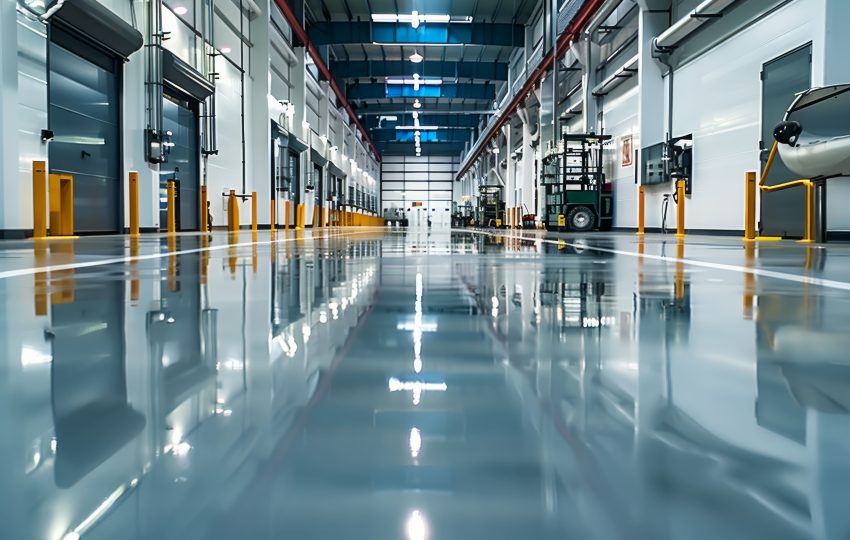
Impact resistance is the ability of a flooring system to absorb and dissipate the energy of falling objects, heavy vibrations, and blunt force without cracking, chipping, or delaminating. At Procure Surface Solutions, we engineer impact-resistant systems for facilities where heavy tools, metal components, or equipment parts are frequently dropped across the Greater Toronto Area and surrounding industrial markets.
We do not simply provide a hard surface; we engineer “toughness”—the critical balance between hardness and flexibility that prevents brittle failure under sudden stress.
Where Impact Resistant Systems Work — And Where They Don’t
Impact-resistant systems are required in zones where mechanical stress is vertical and sudden, rather than just horizontal friction.
Ideal Applications:
- Heavy machinery and engine assembly plants.
- Metal fabrication and tool-and-die shops.
- Aerospace manufacturing and maintenance bays.
- Waste transfer stations and recycling centers.
- Loading docks and shipping hubs handling heavy crates.
- Military and defense equipment facilities.
Not Always Suitable For:
- High-temperature washdown environments (requires Urethane Cement).
- Areas with constant chemical immersion (requires Novolac or Vinyl Ester systems).
- Light-duty commercial spaces where the structural thickness of an impact system is unnecessary.
System selection must be based on “Dynamic Load” and “Energy Absorption”—not just static weight.
Why Standard Coatings Fail Under Impact
Standard thin-film coatings are often brittle. When a heavy object strikes a brittle surface, the energy has nowhere to go, causing the coating to “shatter” and lose its bond with the concrete.
Common causes of failure:
- Brittle Fracture: The coating is too hard and lacks the tensile strength to flex under impact.
- Point-Load Compression: The concrete beneath a thin coating “crushes” upon impact, causing the coating to collapse into the crater.
- Shear Delamination: The force of the impact traveling horizontally along the bond line, “tearing” the floor away.
- Aggregate Pop-outs: Using soft fillers that shatter when struck, leaving pits in the floor.
The result:
- Extensive chipping and “potholing” in work zones.
- Exposed concrete that quickly degrades and creates dust.
- Safety hazards for workers and potential damage to precision equipment.

Types of Impact Resistant Systems
We specify the system build based on the weight and frequency of the expected impact.
System Classifications:
Unsure if your operation requires metallic reinforcement? Contact our engineering team for an impact-load analysis.
Our Approach to Impact Engineering
At Procure Surface Solutions, we treat impact resistance as a structural reinforcement project.
- Energy Load Audit: Analyzing the weight, height, and frequency of falling objects in the facility.
- Substrate Reinforcement: Ensuring the concrete base has the compressive strength to support an impact-resistant overlay.
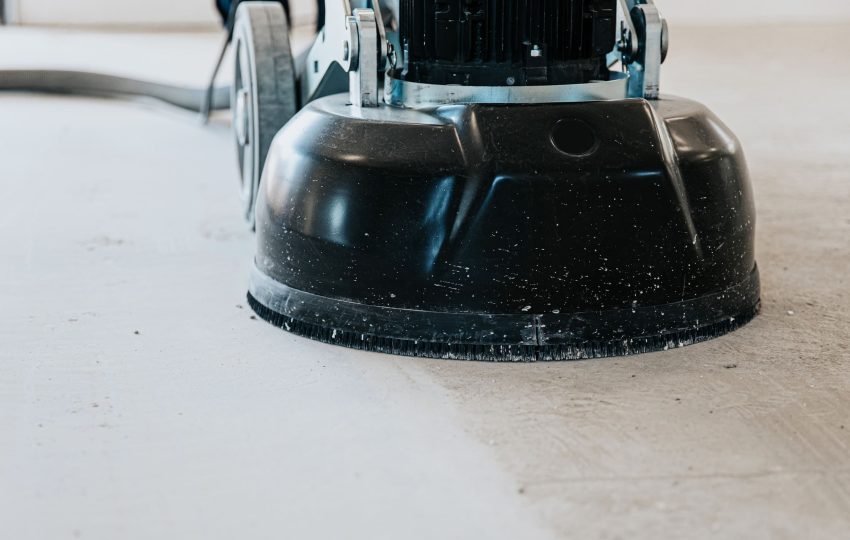
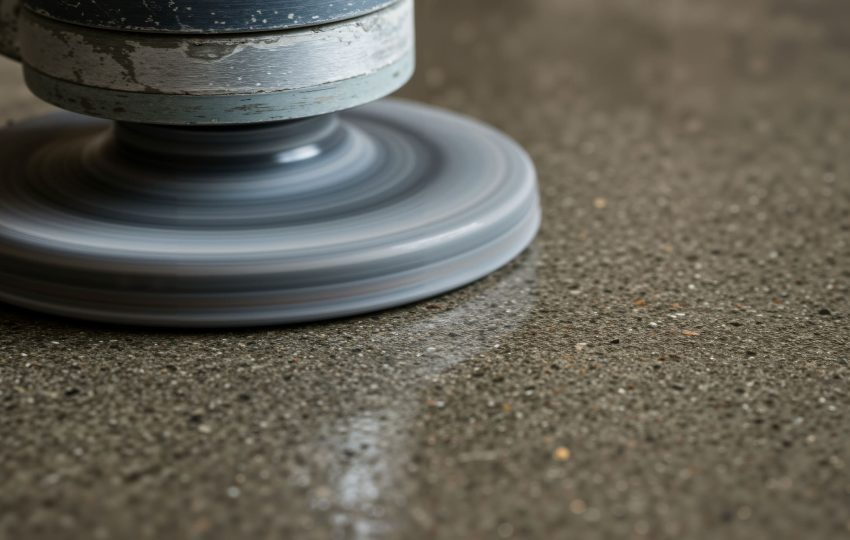
- Heavy Mechanical Profiling: Achieving a CSP 4-6 to ensure the system is “locked” into the concrete substrate.
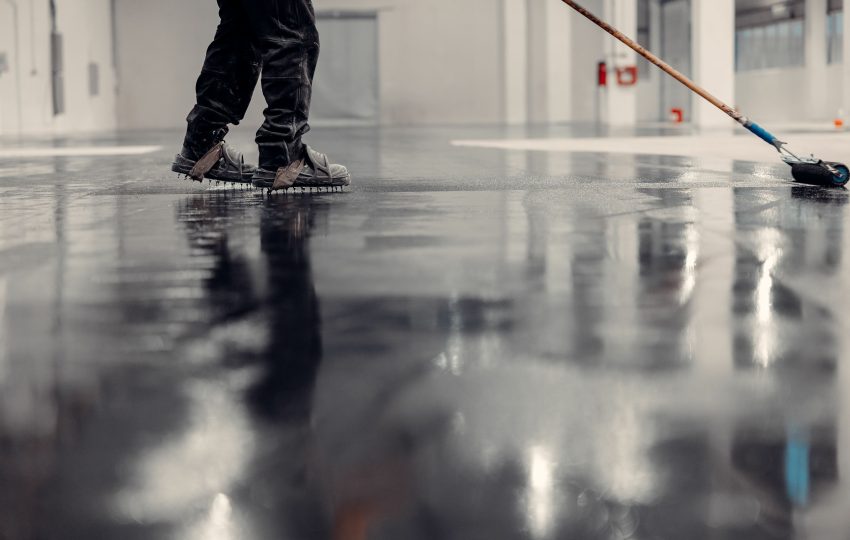
- Resilient Layering: Installing high-build layers (often 1/4″ or thicker) to provide the necessary “cushion” for the energy of impact.
- Durable Encapsulation: Sealing the system with high-density topcoats to prevent fluid penetration into the reinforced matrix.
Quality Assurance & Why Procure Surface Solutions
Most industrial floors fail because they were built for traffic, not impact. We treat impact zones as specialized structural areas.
- Shatter-Proof Engineering: Our systems are designed to dent rather than shatter, maintaining the liquid-tight seal of the floor.
- Extreme Compressive Strength: We utilize mortars that reach up to 12,000 psi, providing a base that won’t crush under pressure.
- Monolithic Protection: No seams or joints for falling objects to “catch” on and break.
- 45 Years of Combined Authority: We have engineered floors for the most aggressive heavy-industrial environments in the GTA.
We do not install coatings—we engineer outcomes.
FAQs — Frequently Asked Questions in the GTA
Yes. In these environments, we recommend a metallic-aggregate mortar system. The iron aggregate provides a level of impact resistance that standard sand-filled mortars cannot match.
Not necessarily. While these systems are much thicker (up to 3/8″), they can still be finished with various colors and textures to meet the aesthetic or safety requirements of your facility.
We utilize “toughened” resins and reinforced layers that have higher tensile strength than standard epoxy. This allows the floor to bridge small structural movements without cracking or delaminating.
OUR CONTACTS
REQUEST AN Impact Resistant System Assessment
Tell us about your environment:
- What is the heaviest object likely to fall?
- What is the height of the potential fall?
- Current condition of the concrete (Is it already pitted or cracked?).
Request Your Technical Consultation Today
Schedule a Consultation
+1 647-531-6777
Email us
info@procuresurfacesolutions.ca
Serving the Entire GTA
Toronto, Mississauga, Brampton, Vaughan, Markham, Scarborough, Richmond Hill, Pickering, Whitby, Ajax, Oshawa, Milton, Oakville, Burlington and surrounding areas.
Contact Us