
Conductive and ESD Flooring Systems Toronto
Engineered Electrostatic Control for Mission-Critical Environments
In facilities that manufacture sensitive electronics, handle volatile chemicals, or operate high-precision medical equipment, uncontrolled static electricity is a catastrophic risk. Electrostatic Discharge (ESD) can permanently damage microchips or ignite flammable vapors. At Procure Surface Solutions, we engineer conductive and dissipative flooring systems that safely bleed off static charges to a grounded point, protecting your assets and personnel across the Greater Toronto Area and surrounding industrial markets.
We do not simply provide “anti-static” coatings; we deliver engineered systems with verified electrical resistance properties that meet strict ANSI/ESD S20.20 and NFPA 99 standards.
Where ESD and Conductive Systems Works — And Where It Doesn't
The choice between “Conductive” and “Dissipative” depends on the voltage sensitivity of your equipment and the specific safety protocols of your facility.
Ideal Applications:
- Electronics and semiconductor manufacturing (SMT lines).
- Data centers and server rooms.
- Aerospace and defense assembly areas.
- Munitions and pyrotechnic storage (Explosive environments).
- Operating rooms and sensitive diagnostic suites.
- Automated solvent storage and chemical labs.
Not Always Suitable For:
- Heavy-washdown food processing areas (requires Urethane Cement).
- Outdoor environments exposed to UV and high moisture (can disrupt electrical pathways).
- Facilities where high-voltage electrical safety (dielectric protection) is required (this is the opposite of ESD flooring).
System selection must be based on “Resistance-to-Ground” (RTG) requirements—not just surface finish.
Why Static Control Fails
Many ESD floors fail because they rely on topical sprays or “anti-static” waxes that wear off. A true ESD system must have a continuous, permanent pathway from the surface to the building’s ground.
Common causes of failure:
- Inconsistent Conductivity: “Dead spots” in the floor caused by improper mixing of conductive elements.
- Insulating Topcoats: Applying a standard wax or sealer over an ESD floor, which blocks the path to ground.
- Poor Grounding Detail: Failing to properly connect the conductive copper tape to the building’s grounding bus.
- Environmental Shifts: Conductivity changing drastically due to fluctuations in facility humidity.
The result:
- Latent defects in electronic products (failures that occur after the product is sold).
- Fire or explosion risks in volatile environments.
- Loss of ESD certification during mandatory facility audits.

Types of Electrostatic Control Systems
We specify the system based on the target resistance range measured in Ohms ($\Omega$).
System Classifications:
Our Approach to ESD Engineering
At Procure Surface Solutions, we don’t just install the floor; we verify the electrical pathway.
- Substrate Diagnostics: Measuring moisture and pH to ensure they won’t interfere with the conductive primer.
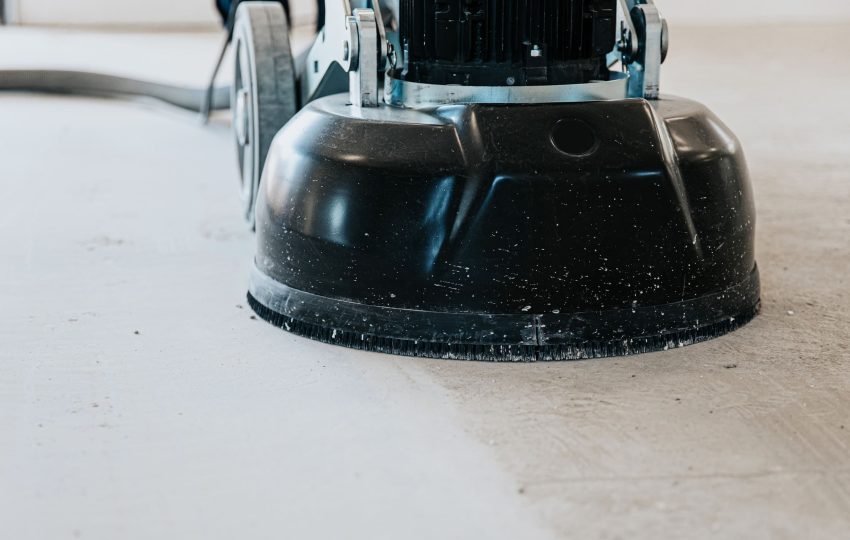
- Mechanical Profiling: Achieving a CSP 3 to ensure a permanent bond for the multi-layer system.
- Grounding Grid Installation: Placing high-purity copper grounding strips at designated intervals and connecting them to the building ground.
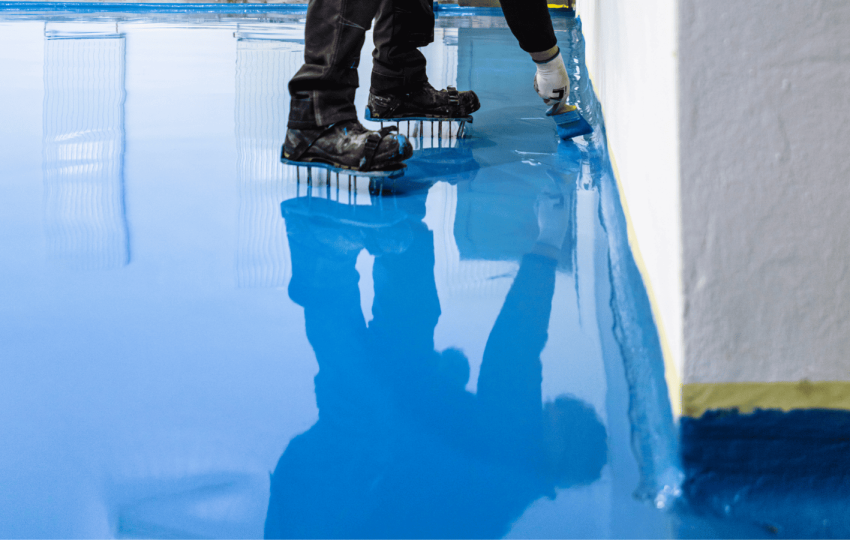
- Conductive Plane Application: Applying a carbon-filled primer to ensure total lateral conductivity across the entire floor.
- ESD Finish Layer: Applying the dissipative or conductive topcoat, engineered with particulate-filled resins.
- Electrical Verification: Performing final resistance testing per ASTM F150 or ESD TR53 to certify compliance.
Quality Assurance & Why Procure Surface Solutions
ESD flooring is a specialized technical discipline. We treat every installation as a critical safety component of your facility.
- Permanent Performance: Our systems do not rely on humidity or topical waxes; the conductivity is built into the molecular structure of the resin.
- Pinhole-Free Integrity: We ensure a monolithic finish to prevent “hot spots” or loss of grounding.
- Audit-Ready Systems: We provide the technical documentation required for your facility’s ESD certification.
- 45 Years of Combined Authority: We understand the nuances of GTA industrial regulations and ESD standards.
We do not install coatings—we engineer outcomes.







FAQs — Frequently Asked Questions in the GTA
It’s all about the speed of the “bleed.” Conductive floors move static charge to ground very quickly ($< 1.0 \times 10^6$ Ohms). Dissipative floors move it more slowly ($1.0 \times 10^6$ to $1.0 \times 10^9$ Ohms). Your equipment manufacturer or ESD coordinator will specify which range you need.
Yes. You must avoid standard waxes or cleaners that can leave an insulating film. We provide specific maintenance protocols and recommend ESD-safe cleaners to ensure the resistance levels remain within the required range.
No. To ensure a verified path to ground and a permanent bond, existing tile must be mechanically removed and the concrete properly profiled to allow the copper grounding strips and conductive primers to function correctly.
OUR CONTACTS
REQUEST AN ESD System Assessment
Tell us about your mission-critical environment:
- Required Resistance Range (Conductive vs. Dissipative).
- Target ESD Standard (ANSI/ESD S20.20, NFPA 99, etc.).
- Type of traffic and equipment used in the area.
Request Your Technical Consultation Today
Schedule a Consultation
+1 647-531-6777
Email us
info@procuresurfacesolutions.ca
Serving the Entire GTA
Toronto, Mississauga, Brampton, Vaughan, Markham, Scarborough, Richmond Hill, Pickering, Whitby, Ajax, Oshawa, Milton, Oakville, Burlington and surrounding areas.
Contact Us